|
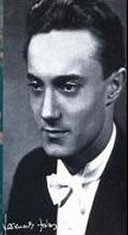
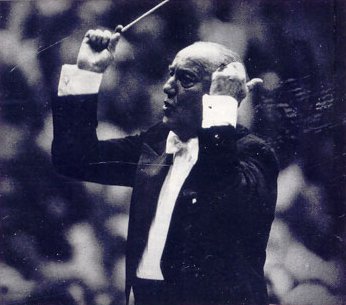
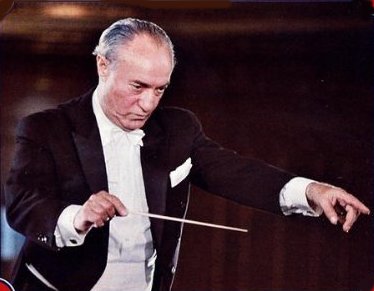
The noted Hungarian conductor, János Ferencsik, actively played music even as a very young boy. He took violin lessons and taught himself to play the organ. He studied at the National Conservatory of Music in Budapest, where his major subjects were organ performance, theory and composition. In 1927, at the age of 20, he joined the Budapest State Opera, where he was engaged as a rehearsal coach (repetiteur), rising to the position of full conductor in 19301 or 19312.
Thereafter, János Ferencsik pursued a double career track as both opera and symphony conductor. In 1930 and 1931, he served as an assistant conductor at Bayreuth, coaching many of the festival's most prominent singers. In Bayreuth, he assisted Arturo Toscanini, an experience which was to be of decisive importance for the remainder of his career. Between the two world wars, he studied in Budapest under such conductors as Arturo Toscanini, Bruno Walter, Felix Weingartner and Wilhelm Furtwängler.4
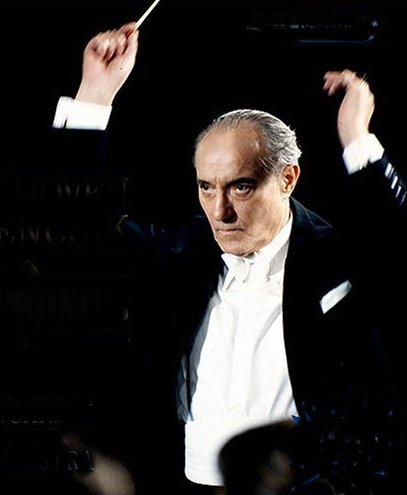
János Ferencsik's international career began in 1937. By the end of the 1930’s, he was one of the Hungarian Opera's leading conductors. His artistic career came to fuil fruition after 1945. He was Chief Conductor of the Hungarian Radio and Television Symphony Orchestra, which he helped establish, from 1945 to 1952. In 19521 or 19532, he was appointed General Music Director of the Budapest Opera (or from 1957 to 19744), as well as Principal Conductor of the Hungarian National Philharmonic Orchestra2 (Hungarian State Symphony Orchestra1) in Budapest, where he remained until the end of his life. From 1960 to 19672 or from 1953 to 19761, he was also Conductor Chairman of the Budapest Philharmonic Orchestra. He was principal guest conductor of the Wiener Staatsoper from 1948 to 1950 , returning in 1964. In Vienna he was also a frequent guest conductor of the Wiener Philharmoniker and Wiener Symphoniker.4
János Ferencsik toured widely abroad, conducting on every continent with the exception of Africa. In 1957, he led the London Philharmonic Orchestra in his first time conducting in the British Isles. His American debut came in 1962 when he led performances of Carmen, Der Rosenkavalier (with Elisabeth Schwarzkopf), and Falstaff at San Francisco to broad acclaim. To the press, he asserted "In art and love, one must not lie!" Ferencsik returned in 1963 to conduct Rossini's Barber and Mozart's Così fan tutte, and in 1977, for a glowing Ariadne auf Naxos with Leontyne Price. At Edinburgh in 1963, Ferencsik brought his Hungarian company to perform a Béla Bartók triptych. Aside from appearances at the Wiener Staatsoper, Ferencsik performed at the city's music festivals and at Salzburg.
János Ferencsik was a friend of Hungarian composers Laszlo Lajtha, Béla Bartók and Zoltán Kodály, was known for his persuasive interpretations of their works and other Hungarian repertoire, and helped spread contemporary Hungarian music abroad. For his services to Hungarian music, Ferencsik was liberally recognized. Among other honors, he received the Excellence Award and was twice the recipient of the coveted Kossuth Prize, Hungary's top music prize (1951, 1961). The Order of the Banner was bestowed upon him by the Hungarian government on his 70th birthday. In his later years, he held a professorship at the Franz Liszt Academy.
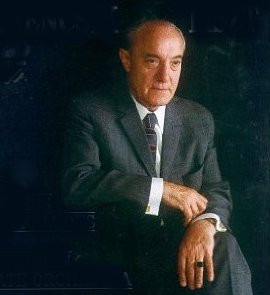
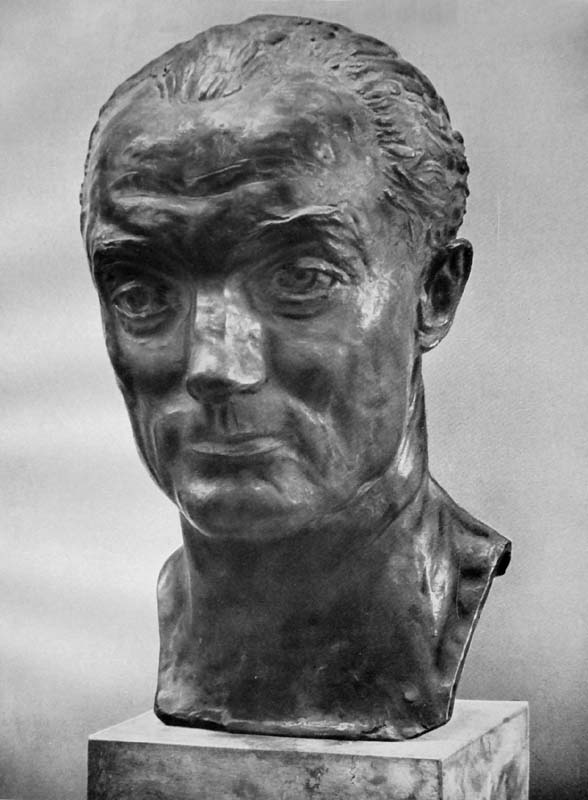
János Ferencsik was one of the leading Hungarian conductors of his time (and there were numerous ones). He chose to remain an integral part of Hungarian musical life. While others of the generation between George Szell and Fritz Reiner, on one hand, and Georg Solti, on the other, elected to become international stars, Ferencsik stayed active and present in Budapest. Exemplary performances of Hungarian music, however, did not preclude stylish work in a broader repertoire. He died in Budapest after a long illness, at age 77.
His recorded legacy is substantial, much of it available on budget labels. In addition to a variety of Hungarian compositions, Ferencsik recorded a number of Austro-German works to positive effect. Among his many recordings are two of Z. Kodály's Székelyfonó. |