|
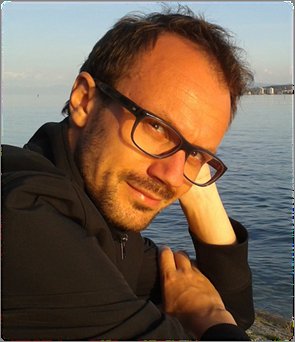
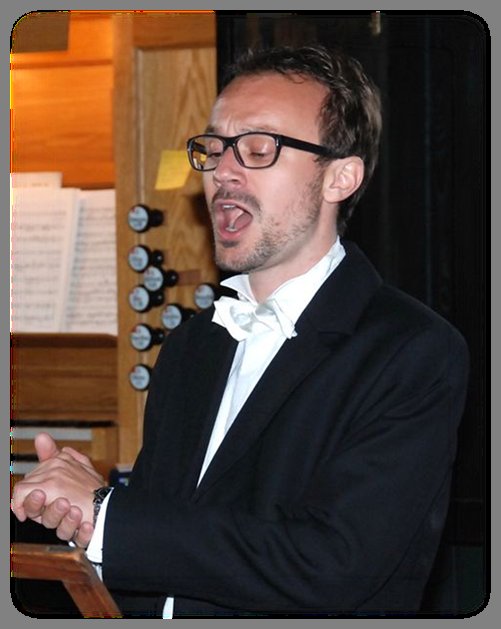
The German counter-tenor, Ulf Zastrau, pasased in 2001 in Recklinghausen (NRW) the examination to the part-time church musician (D). Since 1995 he got his first singing lessons from the Düsseldorf counter-tenor Ingo Hanné, at the Robert-Schumann Hochschule in Düsseldorf he participated in interpretation courses, such as "Early Music" and "The Bach Aria". He has consciously decided against singing studies in a music school in order not to be financially dependent on his voice and the pressure to perform. In 2001 he therefore moved to the studies of physics in Jena (Thuringia). It was here where he got private singing lessons with the retired high school singing teacher (e.g. Halle (Saale), Weimar) and soprano Sigrid Jahn (2002-2013).
Ulf Zastrau has serve continuously as an organist in Recklinghausen, Herne and Bochum.. From 1997 to 2001 he sang tenor in the Hertener Kantorei under Elke Cernysev. From 1998 to 2001, he took over the direction of the Gospelchores Herten-Westerholt, performing with them several large-scale concert events, and CD recordings. Since 2001, he frequently fills in the Kreiskantors Stefan Iseke on holidays and other dates.
Engagements for the alto parts in Baroque cantatas and oratorios followed from 2003. After a few appearances in North Rhine-Westphalia (Heinrich Schütz: Musikalische Exequien, J.S. Bach: Johannes-Passion (J.S. Bach)), he debuted in Jena on the first Advent 2003 in collaboration with LKMD Martin Meier with arias by J.S. Bach and George Frideric Handel at the Stadtkirche St. Michael. At the same time he began his collaboration with the Kantors of Jena, Eisenberg and Neustadt an der Orla, singing G.F. Handel's Dixit Dominus, Antonio Vivaldi's Gloria and various J.S. Bach's Cantatas. He co-operates mainly with local church musicians. In addition, he performs nationally beyond the borders of Thuringia, such as in Mülheim a.d. Ruhr 2002 (H. Schütz and J.S. Bach) or Gladbeck 2003 (Charles Gounod). From 2002 to 2008, he was a member of the Vokalensemble Eisenberg, and a founding member of the chamber music ensemble Consortium Officii, with which he performed Georg Philipp Telemann's cantatas from the Harmonischen Gottesdienst.
In addition, Ulf Zastrau is interested in ensemble direction. he regularly takes part in courses for the interpretation of music of the Renaissance and the Early Baroquet. For the performance of his edition of Central German Baroque cantatas founded by J.T. Römhildt he founded in 2006 the instrumental vocal ensemble Il Compagnia, with whom he also performed several times the "Musical Exequies" by Heinrich Schütz.
Since 2016 he continues develops his voice with Ralf Grobe in Hamburg. In addition to his concert activity in the oratorio field, he regularly appears with Meike Ruhe (viola da gamba) and Jochen Bachmann (harpsichord) in the ensemble compagnia cant'amore. His activities are not limited to early music - he also performs Romantic masterpiece (Camille Saint-Saëns) as well as works by contemporary composers such as John Weyrauch and Rolf Schweizer. |