|
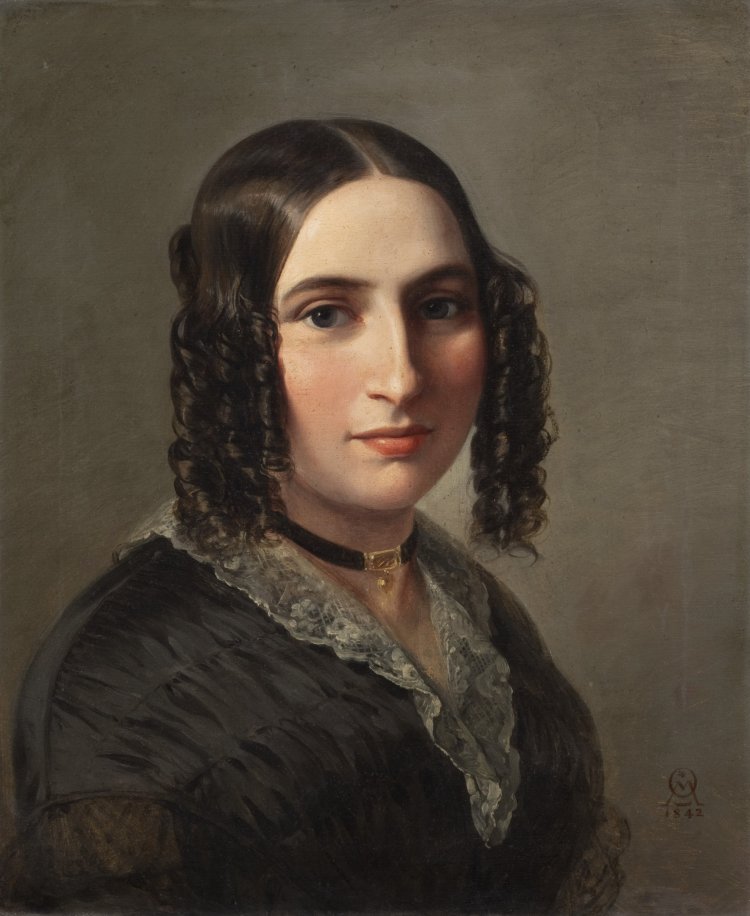
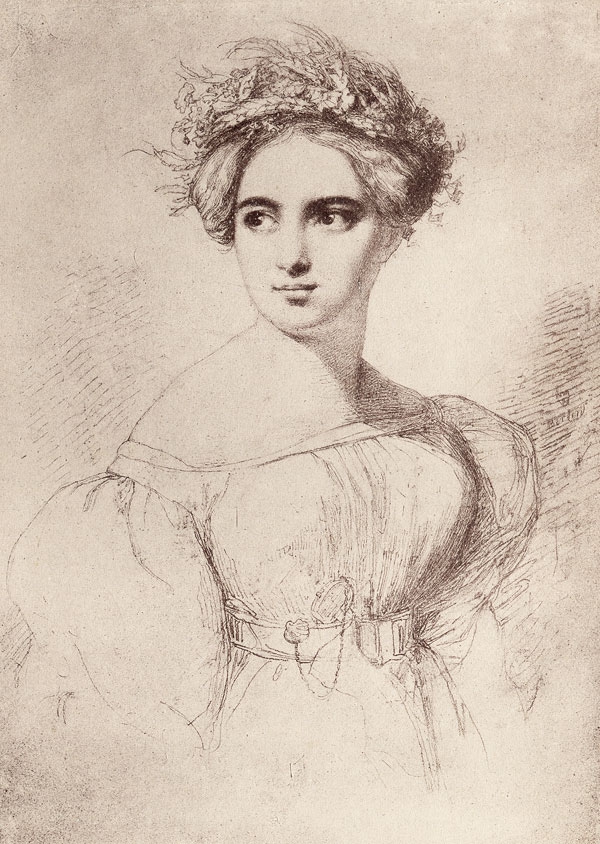
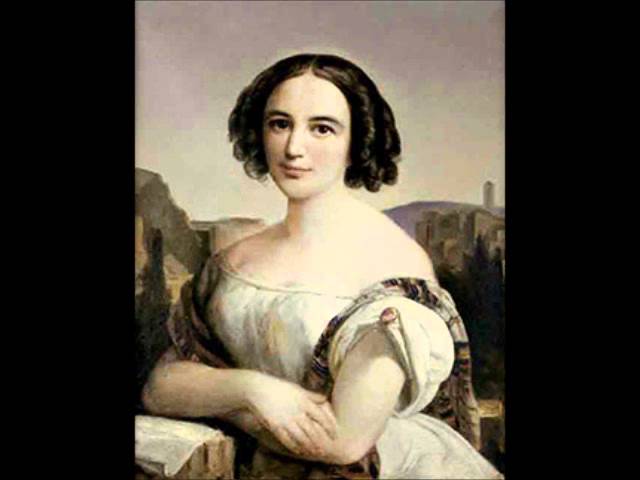
Fanny Cäcilie Mendelssohn was a German composer and pianist of the early Romantic era later known as Fanny Mendelssohn Bartholdy and as Fanny Hensel. Her compositions number over 450, and include a string quartet, a piano trio, a piano quartet, an orchestral overture, four cantatas, more than 125 pieces for solo piano, and over 250 lieder. Most of these were unpublished in her lifetime. Although lauded for her piano technique, she rarely gave public performances outside her family circle.
Fanny Mendelssohn grew up in a well-to-do and educated Berlin family. Early on, the banker Abraham Mendelssohn Bartholdy and his wife Lea also recognized Fanny’s exceptional musical talent, so that Fanny, like her younger brother Felix Mendelssohn, was taught by the best teachers available. For training in music theory and composition, Abraham Mendelssohn engaged Carl Friedrich Zelter, the director of the Berlin Singakademie and a friend of Goethe. Soon Fanny was known among the Mendelssohns’ circle of friends and acquaintances not only as an outstanding pianist, but also as a composer of songs and piano pieces. In his obituary, published shortly after Fanny’s sudden death, the Berlin music critic Ludwig Rellstab wrote that she had shared with her famous brother “also the sisterhood of talent” and had “attained in music a degree of training of which not many artists, for whom art is the exclusive occupation of life, may boast.”
Already at the age of 14, Fanny Mendelssohn was directed by her father to her future role as wife and mother, and so her activities were limited to the domestic sphere. She composed mostly piano pieces and songs that could be performed in domestic concerts. Owing to her family's reservations and to social conventions of the time about the roles of women, six of her songs were published under Felix Mendelssohn's name in his songbooks songbooks Op. 8 and Op. 9 (1827 and 1830).
At the “Sonntagsmusiken” organized by her father at Mendelssohn’s home with musicians from the court orchestra, not only Felix Mendelssohn but also Fanny was given the opportunity to try out her own works in a semi-public setting before a select audience. Fanny married the artist Wilhelm Hensel in October 1829, and, in 1830, they had their only child, Sebastian Hensel. She resumed these concerts in the spring of 1831. She conducted and accompanied her choir of about 20 voices and, together with musician friends, performed oratorios, opera arias and chamber music at a high level. There she also found an auditorium for her own works. In addition to friends and acquaintances, famous personalities such as the Humboldt brothers, Franz Liszt, Clara Schumann, Johanna Kinkel, Heinrich Heine and others met for the “Sunday Music” concerts. These concerts, with which Fanny Hensel, according to Rellstab, earned herself “a merit for the artistic conditions of our father city, for which we remain deeply indebted”, compensated her for many restrictions. The direction of these concerts also had a positive effect on her work as a composer. In 1831 she composed larger works for soloists, choir and orchestra, such as the cantatas Job and Lobgesang and the oratorio based on images from the Bible.
During a year-long trip to Italy in 1839-1840 by the Hensel family, Fanny finally found the recognition she had longed for beyond the family circle and met various musicians who appreciated her works and encouraged her creativity. Back in Berlin, Fanny Hensel composed her most significant piano work, the biographical cycle Das Jahr (1841). The idea of musically representing the 12 months of a year was unique during her lifetime. Only in the last year of her life did she find the courage to begin systematically printing her compositions, even against her brother’s express wishes. From 1846 on, songs for one voice with piano, choral songs a cappella and piano pieces appeared as Op. 1 to 7. However, she did not publish any more of her own compositions: On May 14, 1847, Fanny Hensel unexpectedly succumbed to a cerebral stroke during the rehearsal of one of her Sunday music pieces.
Since the 1990s, her life and works have been the subject of more detailed research. Her Easter Sonata was inaccurately credited to her brother in 1970, before new analysis of documents in 2010 corrected the attribution. The Fanny & Felix Mendelssohn Museum opened on May 29, 2018 in Hamburg, Germany. |