|
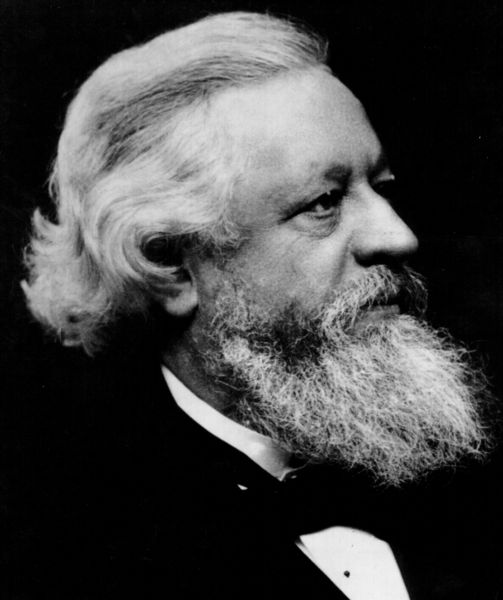
Alexandre Guilmant (Composer) |
|
Born: March 12, 1837 - Boulogne-sur-Mer, France
Died: March 29, 1911 - Meudon, France |
|
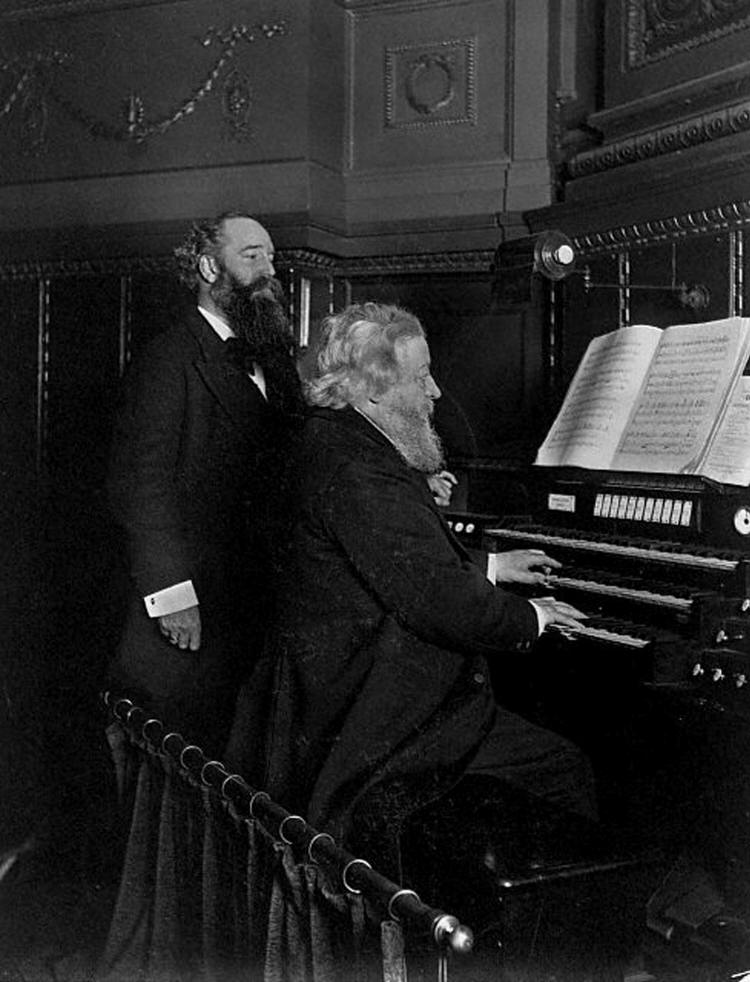
Félix-Alexandre Guilmant was a French organist and composer. He was a student of his father, then of Jacques-Nicolas Lemmens, he became an organist and teacher in his place of birth. In 1871 he was appointed as organist of la Trinité church in Paris, a position that he held for 25 years. From then on he followed a career as a virtuoso; he gave concerts in Europe as well as in the USA.
Guilmant created the Schola Cantorum in 1894 with Charles Bordes and Vincent d'Indy. In 1896 he succeeded Charles-Marie Widor as organ teacher of Conservatoire de Paris. With André Pirro, he published a collection of scores, Archives des Maîtres de l'Orgue (archives of the masters of the organ), a compilation of the compositions of numerous classical French composers in ten volumes, from 1898 to 1914. He proceeded in the same manner for foreign masters of the organ, publishing l'École classique de l'Orgue (classical school of the organ). |
|
Composition |
|
Guilmant was an accomplished composer, particularly for his own instrument, the organ. His organ repertoire includes his 18 collections of Pièces dans différents styles (pieces in differing styles), the more liturgical Soixante interludes dans la tonalité grégorienne (60 pieces in Gregorian tonality) and his 12 books of l'Organiste liturgique (the liturgical organist). He also wrote chamber music, vocal music, a sinfonia cantata (Ariane) as well a lyric scene (Bathsheba).
It should be emphasised that Guilmant's organ sonatas are in fact symphonic in form and structure. His actual organ symphonies include Légende et Final symphonique in D minor (symphonic legend and finale, Op. 71, written in 1888) and Morceau symphonique in A minor (symphonic excerpt Op. 75, written in 1892). |
|
|
|
Source: Wikipedia Website
Contributed by Aryeh Oron (March 2008) |
|
Alexandre Guilmant : Short Biography | Arrangements/Transcriptions: Works | Recordings of Works for Organ |
|
Use of Chorale Melodies in his works |
|
Choral prelude for organ Valet will ich dir gehen (CM: Valet will ich dir geben) |
|
Was Gott thut, das ist wohlgethan , Choral, Op. 93/1 (CM: Was Gott tut, das ist wohlgetan) |
|
Links to other Sites |
|
Felix Alexandre Guilmant (1837-1911) (Official Website)
Alexandre Guilmant (Wikipedia)
Félix Alexandre Guilmant (Encyclopedia.com) |
|
Bibliography |
|
Orpha Caroline Ochse ): Organists and Organ Playing in Nineteenth-Century France and Belgium, pp. 195-96 (Indiana University Press, 1994) |