|
|
Wilhelm Friedmann Bach [45] (Composer) |
|
Born: November 22, 1710 - Weimar, Thuringia, Germany
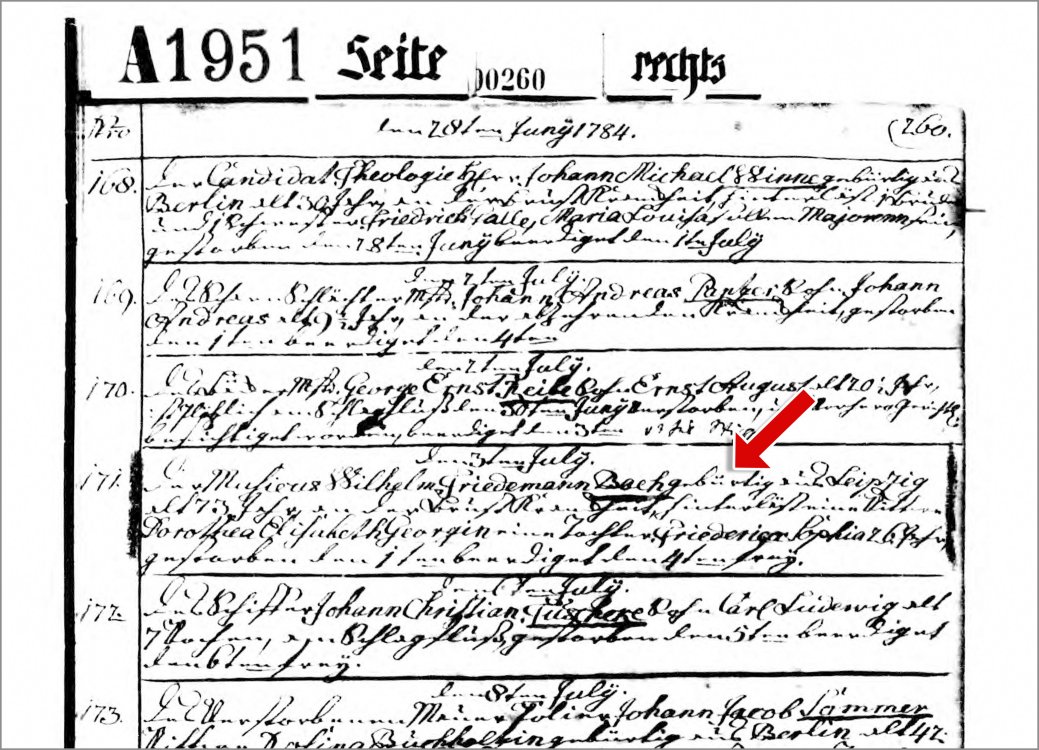
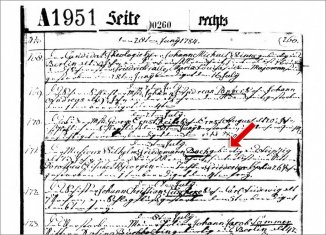
Died: July 1, 1784 - Berlin, Germany |
|
Life |
|
Wilhelm Friedemann Bach [45] was the eldest, and by common repute the most gifted son, of J.S. Bach [24]; a famous organist, a famous improvisor, and a complete master of counterpoint.
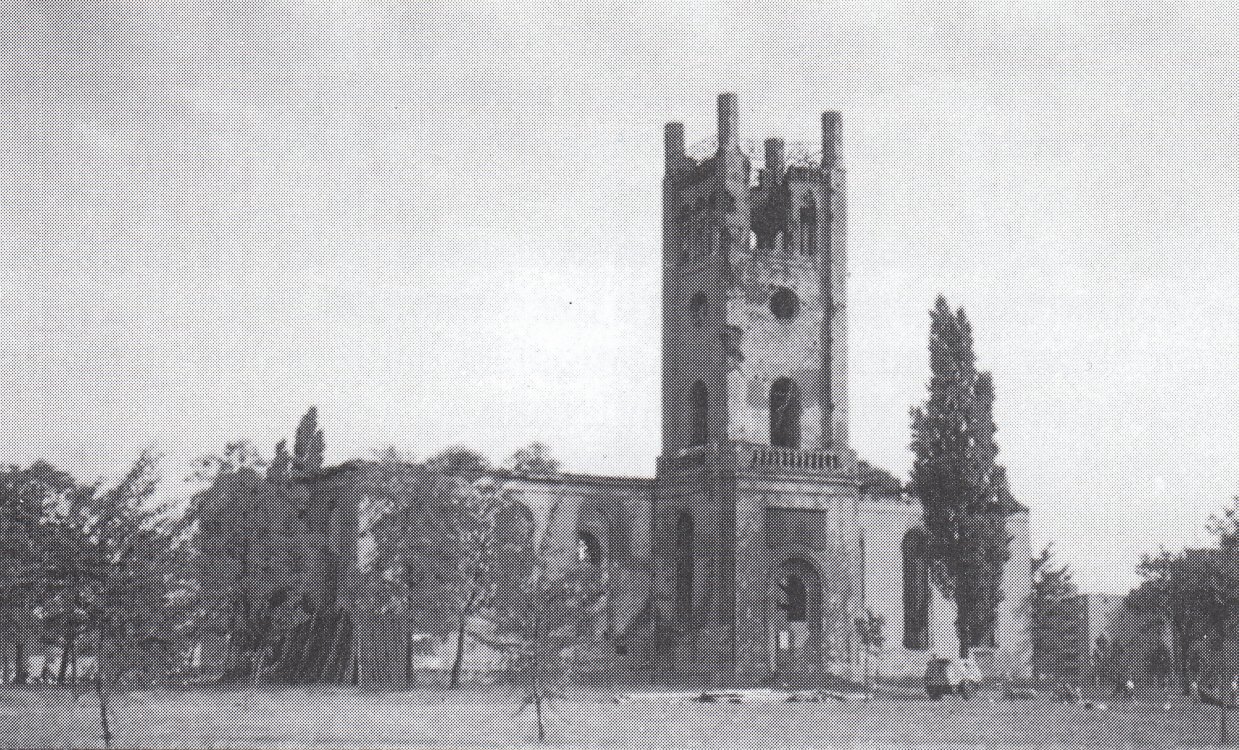
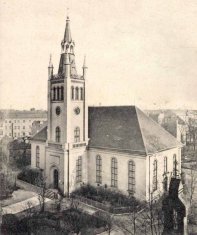
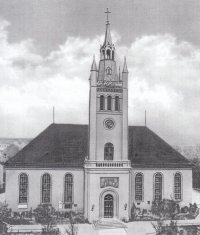
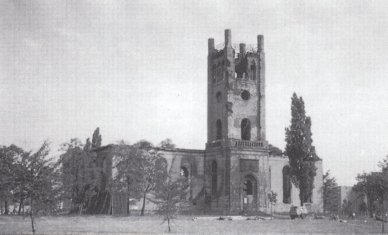
Unlike the rest of the family, Wilhelm Friedemann Bach was a man of idle and dissolute habits, whose career was little more than a series of wasted opportunities. Born in Weimar and educated at Leipzig, he was appointed in 1733 organist of St. Sophia's Church at Dresden, and in 1746 became organist of the Liebfrauenkirche at Halle; his father's influence was enough to secure him the latter position without the usual trial performance.
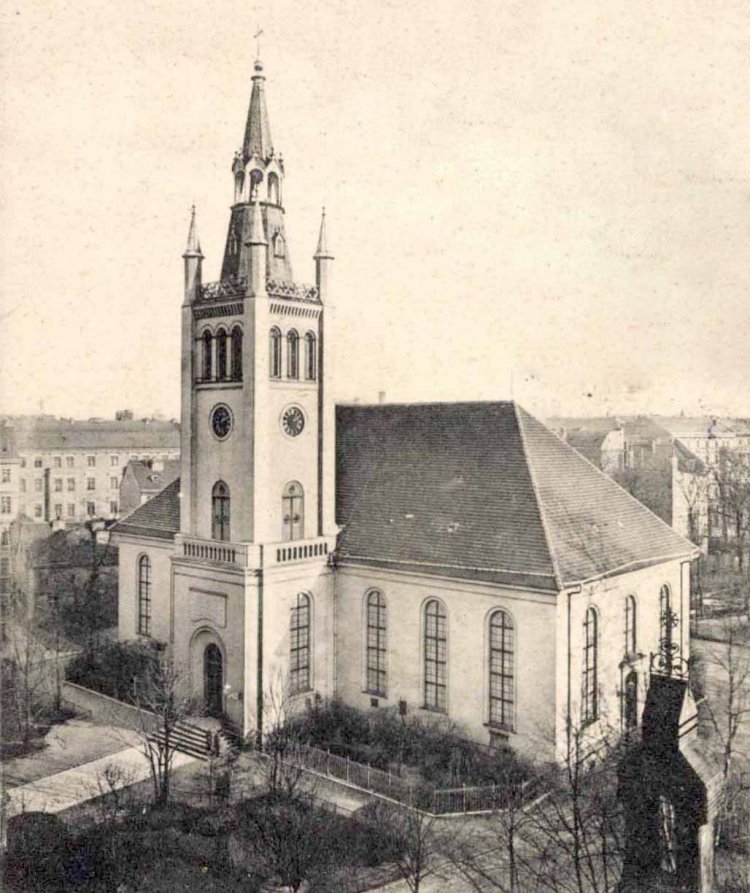
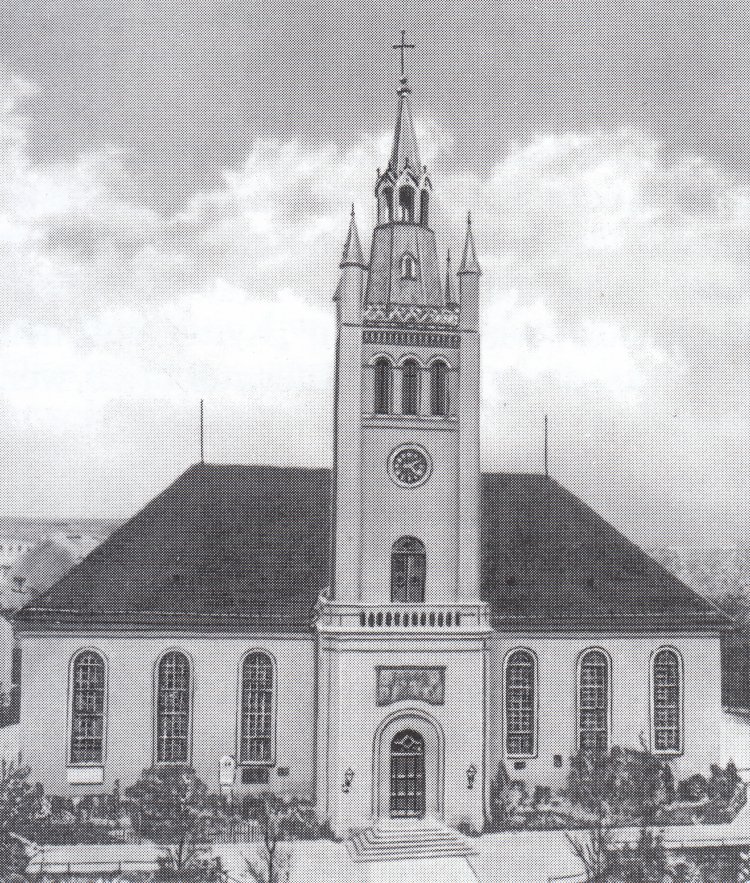
With his father's death in 1750, the stabilizing influence in Friedemann's life seems to have disappeared, and he lived an unhappy life in Halle, from which he frequently traveled to seek other employment. In 1762, he was offered the post of Kapellmeister to the court of Darmstadt, but for some reason he did not accept the position. Two years later, in 1764, he walked off the job in Halle, ending his employment there and indeed his formal employment anywhere. Thenceforward he led a wandering life until he died in great poverty at Berlin, aged 74. SAe his grave/memorial at: Art-1975. |
|
Music |
|
Wilhelm Friedemann Bach's compositions, very few of which were printed, include many church cantatas and instrumental works, of which the most notable are the fugues, polonaises and fantasias for clavier, and an interesting sextet for strings, clarinet and horns. Several of his manuscripts are preserved in the Royal Library at Berlin; and a complete list of his works, so far as they are known, may be found in Eitner's Quellen Lexikon.
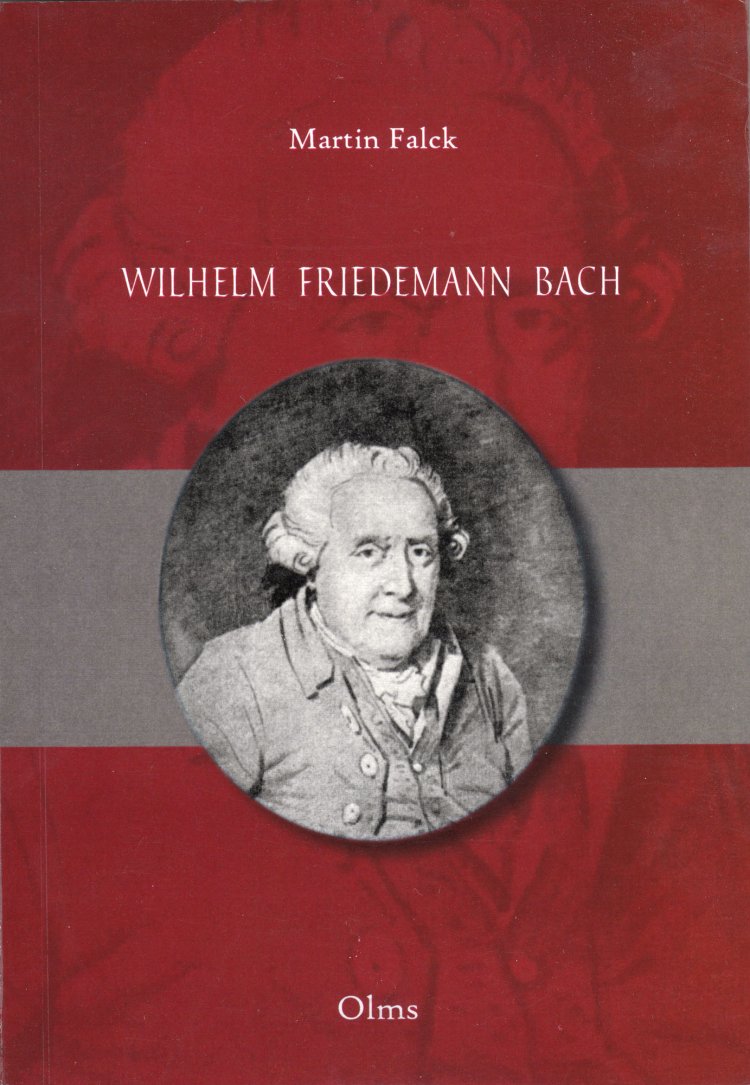
A commonly-used numbering system is that of Martin Falck, who published a catalog of Friedemann's music in 1913. For example, F. 12 stands for the celebrated "Twelve Polonaises" that were completed by 1765.
Additionally, Wilhelm Friedemann Bach along with his brother Carl Philipp Emanuel Bach [46] provided important information to Johann Nikolaus Forkel, the first biographer of J.S. Bach. The biographical information supplied by Friedemann and Emanuel was utilized in the biography of J.S. Bach that Forkel published in 1802. However, unlike C.P.E. Bach, Friedemann was an exceedingly poor custodian of J.S. Bach's music, much of which he, like Emanuel, inherited on their father's death. Not only did a good deal of Friedemann's share of this music disappear unaccountably, but in some cases he is known to have claimed credit for music written by his father (such as the Organ Concerto, BWV 596; because Friedemann wrote his own name on J.S. Bach's autograph score, it was mistakenly attributed to Friedemann when it was first published in the 19th century). |
 |
|
|
|
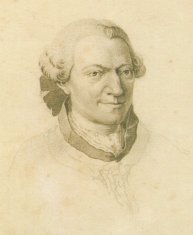
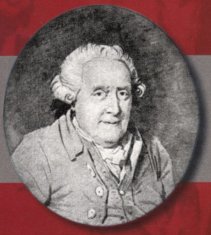
07. Wilhelm Friedemann Bach |
09. Sketch of Wilhelm Friedemann Bach |
|
|
|
|
|
04. |
05. |
|
 |
 |
|
06. |
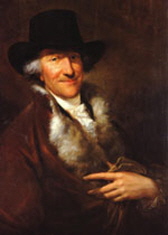
01. Portrait by Friedrich Georg Weitsch, formerly believed to show Wilhelm Friedemann, but merely depicting his pupil Johann Christian Bach (1743–1814) from Halle |
|
Source: Wikipedia Website (incorporates text from the 1911 Encyclopædia Britannica)
Contributed by Aryeh Oron (January 2006); Peter Bach Jr. (November 2016) |
|
Bach Family : Sorted by Name | Sorted by Number | Family Tree | Family History | Discussions: Part 1 | Part 2 | Part 3 |
|
Bach's Pupils : List of Bach's Pupils | Actual and Potential Non-Thomaner Singers and Players who participated in Bach’s Figural Music in Leipzig | Bach’s Pupils - Discussions: Part 1 | Part 2 |
|
Works previously attributed to J.S. Bach |
|
Keyboard Works:
Allemande for keyboard in G minor, BWV 836 (& J.S. Bach) (?)
Allemande for keyvoard in G minor (fragment), BWV 837 (& J.S. Bach) (?)
Scherzo for keyboard in D minor, BWV 844 (?)
Scherzo for keyboard in D minor, BWV 844a (variant of BWV 844) (?)
Prelude for keyboard in C major, BWV 924 (WFN 2) (?)
Prelude for keyboard in C major, BWV 924a (WFN 26) (?)
Prelude for keyboard in D major, BWV 925 (WFN 27) (?)
Prelude for keyboard in A minor, BWV 931 (WFN 29) (?)
Prelude for keyboard in E minor (fragment), BWV 932 (WFN 28) (?)
Presto for keyboard in D minor, BWV 970
Works for Musical Clock:
Fantasia in G major, BWV Anh 133
Scherzo in G major, BWV Anh 134
Bourlesca in A minor, BWV Anh 135
Trio in A minor, BWV Anh 136
L'Intrada della Caccia, BWV Anh 137
Continuazione della Caccia, BWV Anh 138
Il Fine della Caccia 1, BWV Anh 139
Il Fine della Caccia 2, BWV Anh 140
O Gott die Christenheit (Psalmlied), BWV Anh 141
Psalmlied zu Psalm 110, BWV Anh 142
Polonaise in E minor, BWV Anh 143
Polonaise Trio in A minor, BWV Anh 144
March in C major, BWV Anh 145
March in F major, BWV Anh 146
La Combattuta, BWV Anh 147
Scherzo in G minor, BWV Anh 148
Minuet in G major, BWV Anh 149
Trio in G minor, BWV Anh 150
Vocal Works:
Kyrie in G minor, BWV Anh 168, Fk 100
Sonata (Concerto) for 2 keyboards in F major, BWV Anh 188, Fk 10 |
|
Arrangements of J.S. Bach's Works |
|
Additions of trumpets and timpani parts to the opening chorus ( Mvt. 1) of Cantata BWV 80: Ein' feste Burg ist unser Gott
Cantata BWV 30 Freue dich, erlöste Schar (June 24, 1738 or a year or two later)
Bach’s autograph title page for the score does not list trumpets and timpani. Someone, probably C.P.E. Bach, later added in parentheses “concordant e se piace a 3 Trombe e Tamburi”. The original set of parts does not include the parts for trumpets and timpani; however, the 3 parts for Clarino 1, Clarino 2, and Timpani (for mvts. 1 & 12) in W.F. Bach’s handwriting were added later (probably for a performance of this work in Halle). Later C.P.E. Bach came into possession of the score and parts and it was listed in his estate at the time of his death (1790). |
|
Works performed by J.S. Bach |
|
Concerto for Two Harpsichords in F major, Fk 10 - performed by J.S. Bach & Collegium Musicum in Leipzig c1742 |
|
Use of Chorale Melodies in his works |
|
Title |
Chorale Melody |
Year |
|
Ertönet, ihr seligen Völker , Cantata, F. 88 (BR F15) (parts by D. Stoppe; parody of cantata Act Gott, Himmel sieh darein) |
Ach Gott, vom Himmel sieh darein |
|
|
Ach Gott, vom Himmel sieh darein , Cantata, F. 96 (BR F19) |
Ach Gott, vom Himmel sieh darein |
1752-1753 |
|
Organ Trio on Allein Gott in der Höh sei Ehr (lost) |
Allein Gott in der Höh sei Ehr |
|
|
Durch Adams Fall , Chorale Prelude for Organ, F. 38/1/4 (BR A96) |
Durch Adams Fall ist ganz verderbt |
|
|
Jesu, meine Freude , Chorale Prelude for Organ, F. 38/1/3 (BR A95) |
Jesu, meine Freude |
|
|
Nun komm der Heiden Heiland , Chorale Prelude for Organ, F. 38/1/1 (BR A93) |
Nun komm, der Heiden Heiland |
|
|
Chorale Prelude for organ Was mein Gott will, das gscheh allzeit, F. 38/1/5 (BR A97), from 7 Chorale Preludes for Organ |
Was mein Gott will, das g’scheh allzeit |
|
|
Wir Christenleut , Chorale Prelude for Organ, F. 38/1/6 (BR A98) |
Wir Christenleut habn jetzund Freud |
|
|
Links to other Sites |
|
HOASM Wilhelm Friedemann Bach
Bach, Wilhelm Friedemann: Biography (Sojurn)
Classical Net - Basic Repertoire List - WF Bach
Wilhelm Friedemann Bach (1710-1784) (Karadar)
Bach, Wilhelm Friedemann (1710-1784) (Naxos)
Wilhelm Friedemann Bach (Weltchronik) [German]
Klassika: Wilhelm Friedemann Bach (1710-1784) [German] |
Wilhelm Friedemann Bach (Wikipedia)
Wilhelm Friedemann Bach (Wikipedia) [German]
Wilhelm Friedemann Bach (Encyclopædia Britannica)
Wilhelm Friedemann Bach (Answers.com)
allmusic ((( Wilhelm Friedemann Bach > Overview Bach, Wilhelm Friedemann (WQXR) |
|
Bibliography |
|
Eugene Helm : "Wilhelm Friedemann Bach," in Christoph Wolff et. al., The New Grove Bach Family. NY: Norton, 1983 (ISBN 0393300889), pp. 238-50. |
|
|